
This book is a work of fiction that tells the tale of a slow SHTF event that causes the breakdown of American society. While this book is a work of fiction, the author spins a riveting tale of small group survival as modern society collapses.
By Josh, a contributing author to SurvivalCache.com
Overview:
Downloaded from the Internet more than 3 million times before its first printing, Lights Out is a
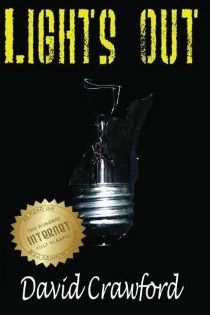
powerful, action packed survival story that has had an effect on the mind sets of millions of people. The story follows the challenges of Mark Turner, dubbed “Karate Man” by his friends, when the lights go out over most of the free world as the result of a massive EMP (Electromagnetic Pulse) Attack. Mark and his family must find a way to survive in the harsh, new world that they have had thrust upon them, while maintaining the virtues and values that our Founding Fathers wished us to uphold.
About the Author:
David Crawford is an avid outdoors man who likes to hunt, fish, hike, off-road, and shoot. He is a third degree black belt with the American Society of Karate where he teaches children and adults. He lives in San Antonio with his wife and two children where he is working on his next novel.
Survival Lessons to be learned:
Without spoiling the book for you, we can tell you right now that you will learn several important lessons from this thought provoking book, including:
1. Team Work: Lights Out portrays an amazing, realistic example of how neighbors can bond together and fend for themselves in a TEOTWAWKI scenario.
2. Modern Equipment: How much do you rely on electronics? Everything from coffee pots to ambulances might be immediately brought to a screeching stop.
3. Distance from home: If you are miles or time zones away from home, what will you do? What if you are separated from your family? Can you get your vehicles to run after an EMP? Do you have a “Get Home Bag?”
4. Mechanical Aptitude: What skills do you have that would benefit your community in times of need? What tools do you have that work without electricity? Can you get that old car running again without power?
5. Who can help you: Local, State and Federal assistance may not come for weeks, months or longer, and when they do it may not be the type of help that you need. Are you ready?
6. Medical: Do you have the basic medical skills necessary to keep you, and your family alive
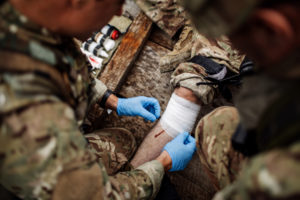
and well? What about modern medicine? Are you dependent on modern medicines?
7. Self Defense: Could you defend you and your family in differing scenarios? This an area that you can learn a lot from in this book.
8. Hunting, Gathering and Farming: Do you have the supplies put back to start a garden? Can you hunt for small or large game for a few weeks? What about a few months or years?
9. Focused leadership: Leading a small group or community is no cake walk. Is your group ready for a long-term disaster?
Favorite Part:
The whole book was very thought provoking, and I learned a good deal about security and
defensive measures from the book, as well as leadership methods and dealing with difficult situations.
Dislikes:
The same warning is placed here as with all other apocalyptic novels: This book has some rather graphic detail and some strong language. It is a great book, but I would use discretion with younger readers.
Conclusion:
This is THE book that got me into preparedness many years ago, and I can say that it is a well written piece of literature, that is a pleasure to read, whether for the first time, or the fifth. I can in no way do this book a justice in a simple review. IT IS A MUST READ. It is as simple as that, don’t take my word for it, read it yourself.
To get “Lights Out” from Amazon (click here)
Get Prepared!!! Visit Our New Survival Gear Store
Forge Survival Supply
Photos by:
David Crawford (book cover)
Mandy Beavers
William Roth

Leave us a Comment Below


My name is Scott and I run SurvivalCache.com along with the help of several great contributing authors.
You can read more on the
{ 35 comments… read them below or add one }
Agreed!!! One of my favorite books. If you have read "One Second After", then this is a must read. David Crawford does a great job of developing the characters in this book. Just when you think the good guys are acting too nice in a desperate situation….they smoke check unarmed bad guys rather than trying to reach the local police. This is "One Second After" when people turn ugly, when food is scarce, water is hard to come by, and neighborhoods ban together for protection. Great book!!!!
And better still is that this book came out before One Second After was even in the works.
Who has connections to Hollywood??? This one should be a movie….
Cant help you there:(
Nice review of the book; I especially like the take-aways that you've provided. I've read and reviewed both Lights Out and One Second After over on my site. I found Lights Out to be the better of the two, but both are well worth the read.
In fact, Lights Out, in my opinion, stands on its own as a literary work and could be lent to non-prepping friends as a conversation starter.
Joe
I agree with your take completely. And thank you for the compliment. I have just book marked your site. Looks good.
Thanks Josh. By the way, I've just added your site to the blogroll on our site.
Joe
Sweet, thanks.
Nice site Joe. I'm reading your posts about chickens.
Good review, Josh. I've just downloaded it to my Kindle. I've got to figure out how to sleep less so I can read more!
Exactly.
I am reading it right now and it is very good. I like the premise of the story. If you stick together you are stronger than being lone wolf.
Good review. One of my top five survival books. I liked that it wasn't about a group that had been prepping for years, had a compound in the Northwest, and had members bugging out to the location w/o kids. Lights Out is generally more realistic. I read the online PDF version and still need to buy the book to support the Author – thanks for the reminder!
Hmm… I wonder what will happen when all the survivalists fleeing to North Idaho run into all the survivalists, anti-government whackos, skinheads, PTSDed 'Nam vets, and meth-freaks that are already there?
It's a small place, northern Idaho. There's not a lot of arable land, the growing season's short, there's heavy snow and brutal cold in the winter. I've always wondered why it got picked as survivalist mecca. It really shouldn't be. I used to live next-door in Spokane WA which is a great place.
Michael,
I'm particularly sensitive about this but the 'PTSDed 'Nam vets' is offensive for several reasons. First, those of us who participated in the stability operation, AKA Viet Nam war, have been painted as crack head, baby killing, nut jobs since I was over there. I heard Sen. Kerry call me a war criminal while I was trying to get drunk after putting a friend in a body bag. It continues to this day. I know a man whose mother never talked to him after he came back because he was a 'baby killer' and a 'rapist'. Within the last year I've been asked if I murdered children.
I know you did not mean it as a slur and I'm not trying to be PC here. All of our combat vets deserve more respect that is apparent in your opening line. Lumping honorable GI's in with meth-freaks and skinheads seems out of line to me. If it was meant as irony I guess I missed it and I apologize. I would suggest that there are a lot of issues for a great many who serve and have been badly used by our political class.
You are quite correct about survival possibilities in the Northwest. If you are not from there, the differences in seasons and climate could make your survival very doubtful until you've learned a great deal about the area.
Just my not so humble opinion.
No trying to diss for sure. I had two uncles that were marine infantry in 'Nam. They're OK now, but they were fighting the war for 20 years after they came home. I met plenty of folks just like my uncles while out in the woods in N. Idaho. My uncles and those guys in the woods used "PTSDed 'Nam vet" to describe themselves. I got it from them. Most were great guys and i always tried to a least say "hi." I'm sure I wouldn't have seen most of them if they didn't want me to see them. I used to drop off canned goods for one guy on my way to go fly fishing (100 yards from the forest service road down a deer trail). They're lumped together because that's the group of folks, other than guys like me out recreating, that I ran into out in the woods, no irony or judgment attached to any of them.
Actually, I've had relatives in every big fight from the revolution to Veit Nam. My dad and two uncles are Korean War vets. I had a few great uncles in WWII, can remember one great uncle that was in WWI. Believe me, I've seen some of the damage that wars do to people and would never try to make light of it. I was, however, trying to poke a little fun at the folk who think they'll flee to N. Idaho.
OK, thank you, sir. As I said, I may be a little oversensitive. I apologize for jumping to the wrong conclusions. Trouble with email is the body language is missing so it is hard to judge.
As you note, the idea that I'm going to run off into the tall and uncut may seem very romantic but if you haven't lived there some, you are in for rude shocks. I think even many of our hunter types have an exalted idea of their capability to provide food and survive for a long time out in the tall and uncut. It will take us the same level of effort as it took the mountain men, the pioneers, and the Indians in the 1800s. Maybe Daniel Boone could just walk out in the woods of Kentucky but Jim Bridger went with a company of men and the supplies they needed out west. Ignorance was, is and will be a killer.
Just order it on Amazon!!!! Can't wait. Thanks for the review.
Great book… Shows how little most people think about being prepared. Especially timely as the last gear review was about a lantern.
Loved the book.
OK, I'm 2/3rds through reading it. The thing I've appreciated most so far (other than the fact that the author agrees with me most of the time
) is the treatment of the slow moving TSHTF/TEOTWAWKI. In "Alas, Babylon" everyone KNOWS what is going down. Here, the interaction with the government doesn't just interrupt. WROL (without rule of law) is there and real but there is still an effective law enforcement presence and getting crosswise with it is serious. So far I've been impressed with the author's understanding of most peoples' reluctance to ignore 'the rules'. The story has some excellent action but I still think the author focuses too heavily on the military options. I notice that the community would fail without what amounts to a light infantry company. That and a little too much deus ex machina when there is something that they need that is not available (essentially unlimited fuel when they need it for example) detracts a bit. As a study in what happens in cities and how the government will react is great. The recognition of the county sheriff as the ultimate authority (he answers to no one except the voters) is also very insightful. A good read (so far) with a lot to think about. I'll finish it this weekend – thanks for the recommendation, Josh. In spite of what I still think is excessive focus on the military aspects of survival, it contains a lot of good thought and ideas.
I had two criticisms when I read it, which was a while ago, but I think they went something like this.
1. They made everyone dependent on the two main families and their stuff. That's probably fine for a couple of days, but they needed to do things like get other people's wells pumping (car battery? bicycle? lawn mower engine?) and get them out on bicycles or something, so they're not dependent on the two guys with the two trucks for all transport.
2. They didn't do the little things like build spike strips with 1×6's and nails and screws to stop cars from coming into their development or put someone on a roof so they could see people coming from a ways away. If I remember correctly one side of their development was bordered by tall grasses and woods and they didn't send anyone out to cut that stuff back so people would have a harder time sneaking in.
But, all in all it was a really good read and know one can think of everything.
Oops, no one.
Actually, in the story they set up a wind mill on someone else's well, and rig rain catches for almost everybody else. Also, they dug car traps and built reinforced fences around the neighborhood, and welded up deer stand like towers in several locations around the neighborhood for over watch. They cleared back all of the trees and bushes for 100 yards on every side of the neighborhood, and kept the grass short for 100 yards on the inside of the fence as well, and that does include having to cut back some planted crops for better visibility. To my recollection, the internet version may have had those problems, but I dont really remember.
Sounds like they fixed it in later additions. I read it when it first popped on to the internet.
Good concise review. Thank you.
Just finished reading it. Not bad. My opinion that there is too much military action still holds but it did make for an exciting read. One of the things that was hinted at that I think would make a big difference is a short wave radio. Even just hearing the foreign broadcast stations might give a different take on what's happening and ham radio ops might have been an excellent source of information for the Virus concern. The ability of people, even during TEOTWAWKI, to ignore reality or want to depend on the government is well displayed, as astonishing as that attitude is to me.
I just finished reading it for the second time. I love this book and it is the one that got me started in survival preparedness and opened my eyes to a lot of the problems in these scenarios. I have began reading other books and looking at a lot of things since reading this.
I have met the author and he is a kind and gracious man. I picked his book up at our karate tournament. I too am a member of the American Society of Karate with Hill Country Karate in San Antonio. I am not a black belt myself.
Overall I think this book is great and does have such a great story line it ireally well versed in introducing others into looking at the potential problems without completely freaking them out. When I read "One Second After" if left me depressed but made me think even harder too. Both excellent books with a little differing perspectives.
Excellent book. Very character driven. However the refugee's that the characters had to deal with were rather limited and a little unrealistic. I would say that "One Second After" was more accurate in the volume of refugees, and hunger. I go further and say that even "One Second After" fell short of the chaos that would ensue if the world was abruptly knocked back to the 1700's. The waves of refugees would number in the hundreds of thousands and millions.
Chir,
A slightly different take on what happens from me. I expect the world to go back to the mid to late 1800's. Some things will remain – the use of wind, sun and water power for example. The interesting question becomes how fast the gangs form and do they do so quickly enough to become MZB hordes. In 'Lights Out' the rule of law doesn't ever completely go away. This reduces the ability of MZB groups to form. In addition, such groups will most likely prey on those in their normal range first (in my not so humble opinion). By the time they decide to move out, it may be too late to get very far. Supplies of food, fuel and water may no longer allow massive movement of people. If you think about the migration of peoples in earth's history, groups move by pressure. As they are pressured on one side, they move into a weaker groups territory on another side. Large scale movement is really rather rare on a smaller scale. In the American west, most 'pioneers' came from the edge of the frontier for example. It was a rare New Yorker who went from the city to the western plains. The plainsmen came from those along the Mississippi river for example. There were exceptions, the German settlements in Texas for example, but these tended to not be on the frontier edge. Part of the reason I think that many spend too much time worried about large scale combat is that after the initial week or two, it is probably not going to be possible in general. War lords may crop up, but in general the slow speed collapse will not support MZB development.
(Continued)
(Continued)
If it is a catastrophic collapse ('Alas, Babylon' scenario) then surviving gangs from the fringe of ground zero might have a chance to decide to get out immediately. In this case they might take any surviving groups by surprise and cause a great deal of initial damage. The key is that the larger the group, the heavier the logistics trail must be. The armies of the 1800s lived off of the land by foraging but their speed of movement was slow by modern standards. A large group of MZB would require a substantial amount of time to maintain their provision levels and just how good would they be at using whole grains for food? While I don't want to belittle the problems that gangs can present, the logistics of movement for a large number of people is prohibitive in my estimation. That is part of why I suggest that assault carbines are not that necessary for a survival battery.
Of course, I'm trying to draw lessons from history. If we are hit with a black swan, all bets could be off. I guess I look at what I see as most likely to happen based on what humans have done in other collapses through out history.
I picked this up last week off of Amazon. Great book, albeit a bit repetitive sometimes and as someone stated earlier, very fighting oriented. I think to make this book work that was pretty necessary though.
Although fiction, the book had some great information and I found myself thinking of a few things that I never pondered before. Great read and highly recommended.
Just finished the book tonight. It was a great read, but I agree the language was a bit more than I liked so I wouldn't let my kids peer over my shoulder while reading. Lots of great lessons and things to note with regard to security and community involvement after an EMP style even when SHTF. Definitely a good book though!
Capt Bart – I love you man and appreciate all your participation on the site…but I have to laugh when you say you are reading "lights Out" on a kindle!!
Heh. People are talking about how great the book is, and enjoy reading about SHTF fiction, yet complain about the less than sanitized language? Seriously? If SHTF, my language will be a lot worse than anything printed in this book. Stop it.
{ 4 trackbacks }